
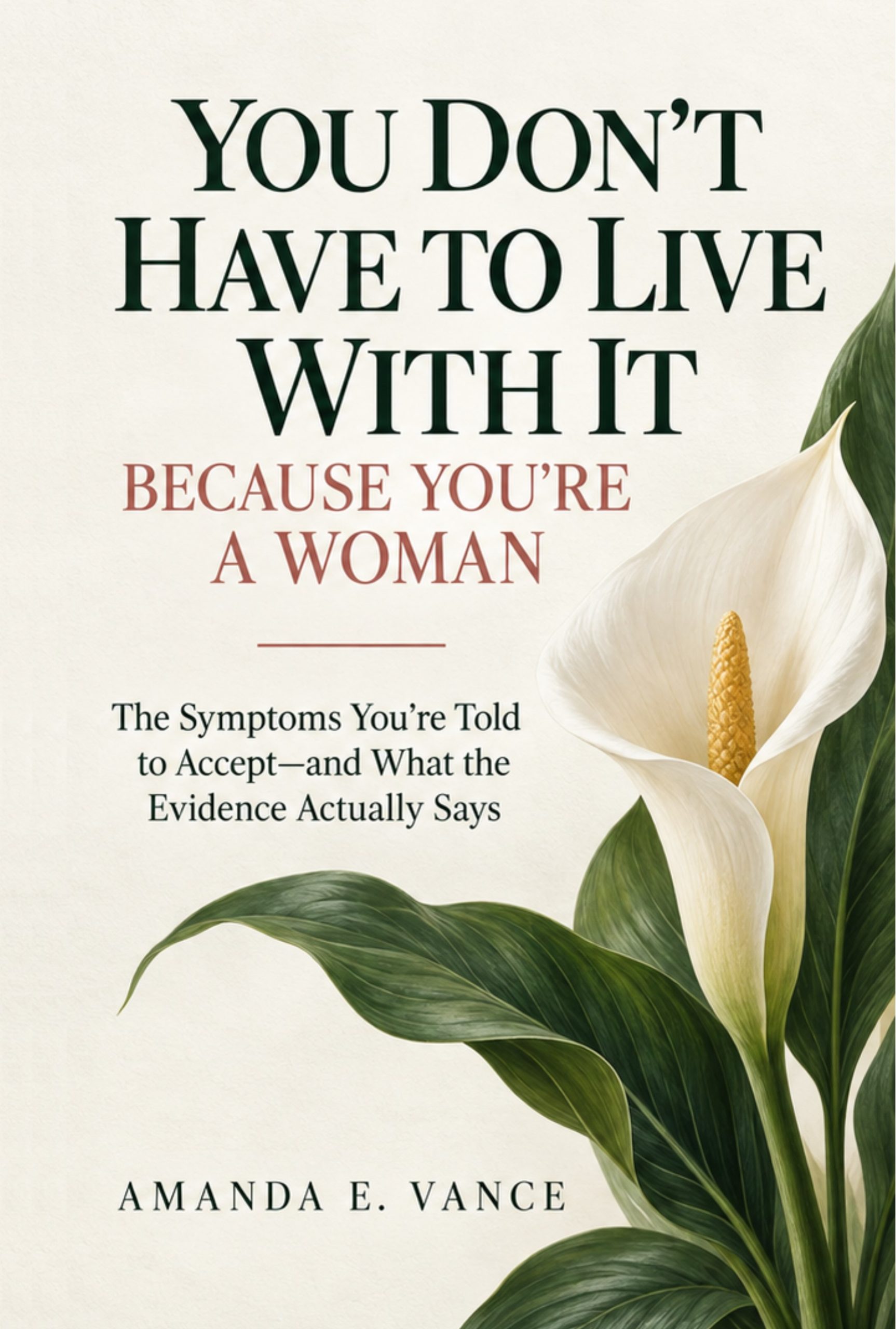
You Don’t Have To Live With It Because You’re a Women
R119,99
A clear, evidence-based guide for women who have been told that pain, bleeding, exhaustion, bladder symptoms, menopause changes or other health concerns are simply something they must endure. Discover what may deserve further investigation, what the research actually says, and how to ask better questions and advocate for respectful, informed healthcare.
Description
What if the symptoms women are told to accept are common—but not necessarily normal, harmless or untreatable?
“You’ve had children. Of course you leak urine.”
“Periods are supposed to hurt.”
“It’s just menopause.”
“Lose weight and it will fix itself.”
Women hear these explanations every day. Sometimes they contain part of the truth. Too often, however, they become the end of the conversation—before anyone asks what else could be happening, why the symptom matters or whether something can be done.
You Don’t Have to Live With It Because You’re a Woman examines some of the most persistent assumptions surrounding women’s health. Drawing on current research, it explores period pain, urinary incontinence, menopause, weight and metabolism, heart disease, ADHD in women and girls, and other experiences too readily dismissed as an unavoidable part of being female.
This book will help you understand:
• What the evidence actually says
• When “common” should not mean “nothing to worry about”
• What else symptoms may indicate
• Why women’s conditions are sometimes missed, dismissed or diagnosed late
• Which questions can help you have a more productive medical conversation
• Why consent and bodily autonomy remain yours—even during treatment
This is not a book that promises miracle cures or encourages women to diagnose themselves. It offers something more useful: clear evidence, practical context and the confidence to ask better questions.
Your symptoms deserve investigation. Your concerns deserve to be taken seriously. Medical expertise can guide your choices—but it does not own your body.
Common is not the same as normal. And being a woman is not a reason to simply live with it.